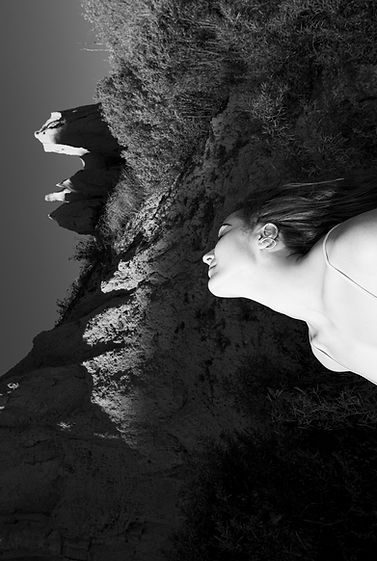
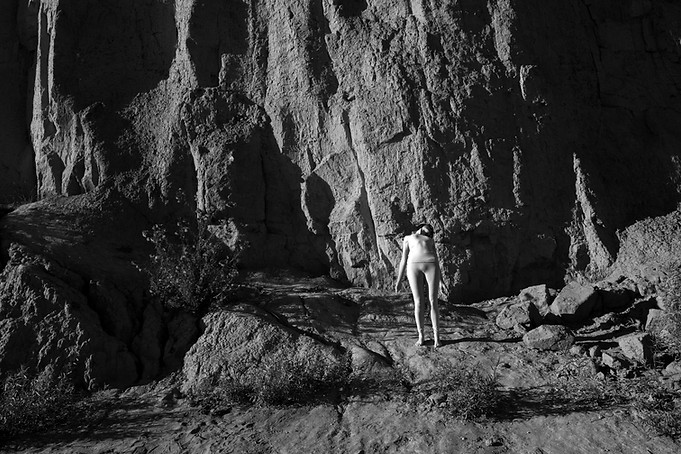
Turning To Stone, 2025 Exploring the potential for women and rocks to have a great understaning of one another While in Scotland, I did a project about land requiring I consult with a geologist. The more I learned about Scotland’s interesting geology, the more I began to see rocks as sentient; silent observers, natural archives of time and history. Rocks quickly appeared as dynamic as people: each one a different form, originating from a different place, with a different story to tell. Turning To Stone (named after the book by geologist Marcia Bjornerud) revolves around my change in perspective regarding rocks. Beyond that, it compares and highlights the adjacencies I've found between women and rocks. Retrospectively, I’ve noticed that a lot of my work has involved photographing women interacting with stone- revealing my subconscious interest in the subject matter. It is clear that the same things that interest me about geology interest me about women. Women and rocks have had traditionally similar roles throughout our history: both tasked with absorbing information, storing it and passing it along to aid in the fundamental shaping of our world. We would be nowhere without the stories kept safe by women, just as we would be nowhere without our planet's geographic and geological stories that are (literally) set in stone. The importance of geology (beyond the repurposing of rock as material) is overlooked by most, not unlike the importance of women in society’s greater functionality (we focus on fertility and childbirth- a similar focus on the potential for reproduction/ repurposing). This shared treatment has left women and rocks exploited throughout history: women exploited as purely social and emotional resources, rocks exploited as natural resources. Arguably, rocks are more stereotypically masculine than feminine. They are jagged, irregular and heavy. They take up space, they crumble, they have the potential to be quite destructive. Yet, I can't help but feel there is a link between women and stone that runs much deeper than that of women and other earthly elements. The concept of the ‘divine feminine’ compels us to associate symbols like water and greenery with femininity and fertility, but I find that this association reduces women solely to their wombs and potential to bear children. While childbirth and pregnancy are important parts of many women’s lives, I don't consider them representative of a joint female consciousness- I’m not sure such a thing even exists. Representing women in such a reductionary way reaffirms the socio-political gender binaries that do women no favours. It is my hope that Turning to Stone will help reevaluate the stereotypical visual relationship between women and the natural world. It’s important to me to present women as active agents in these photographs, to reflect the essential impact both women and stone have had on our understanding of the world around us.